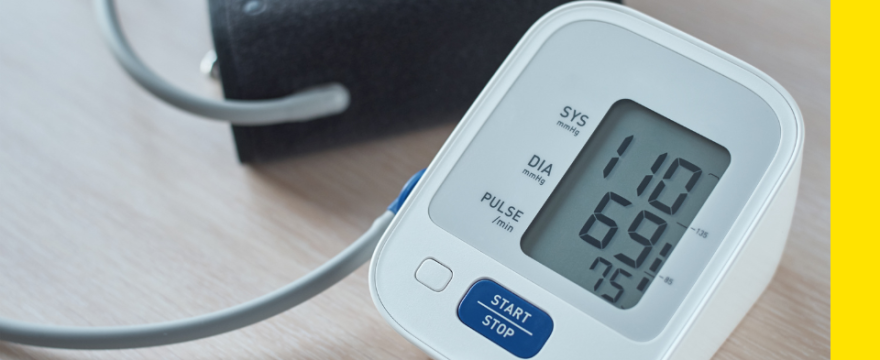
I’m currently in the middle of my master’s program in clinical mental health counseling, and one evening in class, a classmate asked me a simple but powerful question: “How do you lower high blood pressure?”
It was a great question, but it came at the end of a long day. It was late, our class had started at 6 p.m., and my mind had already shifted into rest mode. I wasn’t in a space to unpack something that deep in that moment.
Because the truth is… the answer isn’t simple.
So I told her honestly: “That’s a bigger conversation than we can have right now.”
And at the core of that conversation is one foundational question most people don’t expect:
What are you willing to give up?
Because when we talk about lowering blood pressure, we’re really talking about transforming the health of your entire cardiovascular system. And that requires more than quick fixes, it asks us to look closely at our daily habits.
We can’t continue eating the same foods, following the same routines, and expect a different outcome. The reality is, many of the patterns we’ve normalized, especially here in the South, don’t support long-term vascular or brain health.
And that’s where the real work begins.
When we think about managing high blood pressure, we usually focus on preventing heart attacks and strokes. However, recent research reveals that routine blood pressure readings can also serve as an early warning system for your brain health.
Nearly half of all adults in the U.S. have high blood pressure, often called the “silent killer” because it typically presents without obvious symptoms. But beneath the surface, uncontrolled hypertension actively accelerates the aging and stiffening of your blood vessels. This vascular aging doesn’t just affect your heart, it causes damage to the blood vessels in your brain, making it a highly prevalent and modifiable risk factor for dementia.
The Hidden Patterns in Your Blood Pressure
Researchers have identified two specific risk scores derived from routine clinic visits that act as powerful indicators of future dementia risk:
- Pulse pressure-heart rate index: Calculated from standard heart rate and blood pressure measurements, a higher index before age 65 is associated with a significantly higher risk of developing mild cognitive impairment or probable dementia. In fact, every one-unit increase in this index is linked to a 76% higher risk.
- Estimated pulse wave velocity: This metric uses your age and blood pressure to calculate a marker of vascular aging. Adults with persistently elevated or rapidly increasing pulse wave velocity are significantly more likely to develop dementia, even when accounting for other clinical risk factors like smoking, kidney disease, and cardiovascular history.
How to Reverse the Trend Starting Today
The most empowering finding from these studies is that managing vascular health earlier in life can profoundly influence long-term brain health. By utilizing these metrics, clinicians can identify risk and tailor treatment strategies well before a patient begins to manifest cognitive decline. Medical professionals emphasize reducing this risk through a combination of blood pressure medications and proactive lifestyle changes.
To actively combat vascular aging and keep your blood vessels flexible, you can implement several effective habits today:
- Engage in regular aerobic exercise to maintain arterial flexibility and reduce stiffness.
- Adopt a heart-healthy diet, such as the DASH or Mediterranean diets, which focus on whole foods, fruits, vegetables, and low sodium to help naturally lower blood pressure.
- Maintain a healthy weight to reduce cardiovascular strain.
- Quit smoking, as tobacco use is a known clinical risk factor for accelerating vascular aging and increasing dementia risk.
- Manage stress and eliminate alcohol consumption, both of which can elevate blood pressure over time.
When I look at everything that supports healthy blood pressure, two areas tend to be the hardest for most people: consistent exercise and managing stress. And what many don’t realize is that these two are deeply connected, when one improves, the other becomes easier.
For me personally, stress management isn’t something I leave to chance, it’s something I build into my day on purpose.
It starts in the morning. I wake up early enough to give myself space before the world starts making demands on me. That time is protected. It looks like Qigong, a warm cup of tea, breakfast, journaling, organizing my day, prayer, meditation, and simply sitting in quiet. That foundation sets the tone for everything that follows.
Then, in the middle of the day, I move my body, usually strength training, sometimes a walk. That movement isn’t just about fitness; it’s how I regulate my nervous system, clear my mind, and reset my focus.
Now, I know this can feel unrealistic if you don’t work from home or if your schedule feels nonstop. But this is where strategy comes in. Your environment matters. Even in a busy work setting, there are ways to support your body, stepping outside for a short walk, keeping weights nearby in your office, or simply building in moments of movement where you can.
One of the things that used to trip me up was something as simple as clothing. I’d think, “I’m already dressed for the day, I don’t want to sweat or change.” But at some point, I had to shift my thinking.
Taking care of my body had to become the priority.
And when you make that shift, you start finding solutions instead of excuses. You plan for the clothes. You adjust your routine. You make it work.
Because your health isn’t meant to fit into your life as an afterthought, your life is meant to support your health.
As medical experts note, “You don’t want to wait until a patient starts manifesting cognitive decline before you act”. By addressing hypertension aggressively and early, you are not just protecting your heart, you are investing in your long-term cognitive health.
Ready to Protect Your Brain Before Symptoms Ever Show Up?
Here’s the truth most people miss: by the time cognitive decline begins to affect your memory, focus, or performance at work, the underlying vascular and metabolic changes have often been developing for years.
But the research you just read points to something incredibly hopeful, you don’t have to wait for that moment.
You can start now.
If you’re a woman who knows her energy, clarity, or focus isn’t where it used to be…
If you’ve been told your numbers are “fine” but something still feels off…
Or if you simply refuse to leave your brain health up to chance…
This is exactly why I created the Brain Health Breakthrough Coaching Program.
Inside this program, we don’t just talk about prevention, we walk you step-by-step through how to:
- Support healthy blood pressure and vascular function through targeted nutrition and lifestyle strategies
- Improve mental clarity, focus, and energy so you can show up fully in your work and relationships
- Address the root causes of cognitive decline using a metabolic and neuroscience-based approach
- Build simple, sustainable habits that protect your brain for the long term
You don’t have to figure this out on your own, and you don’t have to wait until things get worse to take action.
If you’re ready to be proactive about your brain health, I invite you to learn more.
Watch the webinar where I walk you through the exact approach we use inside the program and how it can support you.
Your future brain is being shaped by what you do today.
Leave a Reply