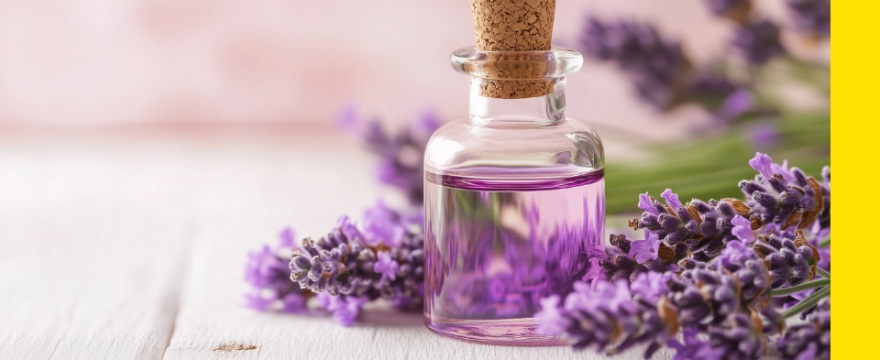
The menopausal transition is often accompanied by a rollercoaster of hormonal fluctuations that can trigger frustrating symptoms like hot flashes, profound sleep disorders, mood changes, and a decline in overall quality of life. For many women, finding relief means navigating a maze of pharmacological treatments that often come with unwanted side effects like dizziness, gastrointestinal issues, and daytime drowsiness. However, an increasing body of clinical research points to a surprisingly simple, non-pharmacological ritual that can profoundly improve postmenopausal well-being: inhaled aromatherapy.
Here is how a targeted nightly aromatherapy ritual can help you sleep better, think clearer, and genuinely thrive during and after menopause.
Insomnia and frequent nighttime awakenings are among the most common and debilitating complaints during postmenopause. Fortunately, incorporating essential oils, specifically lavender, into a nightly routine has been clinically proven to help.
In a recent clinical trial involving postmenopausal women diagnosed with insomnia, participants who inhaled lavender essential oil just before bedtime experienced significant improvements in sleep efficiency and their perception of total sleep time. They also reported waking up feeling noticeably more rested and “good” compared to those who did not use the oil.
The secret to this success lies in how essential oils affect our hormones. Research has demonstrated that aromatherapy with lavender essential oil actually increases blood serum melatonin levels. Melatonin, often called the “sleep hormone,” naturally decreases as we age, which partially explains why older adults struggle with sleep. By diffusing lavender or placing a few drops on a cotton ball near your pillow, you are directly encouraging your body to produce the melatonin needed to regulate your circadian rhythm and induce deep, restorative sleep.
The benefits of breathing in essential oils extend far beyond relaxation; they actively stimulate and protect brain function. Once inhaled, the volatile molecules of essential oils travel through the olfactory pathway directly into the limbic system of the brain, which controls emotions, memory, and learning.
For women experiencing the frustrating “brain fog” often associated with aging and menopause, aromatherapy offers a powerful cognitive boost. A comprehensive meta-analysis found that inhaled aromatherapy significantly increases global cognitive scores, including the Mini-Mental State Examination (MMSE) and the Montreal Cognitive Assessment (MoCA). Furthermore, regular inhalation of essential oils has been shown to decrease levels of Homocysteine (Hcy) in the blood. High Hcy is an independent risk factor for cognitive impairment, meaning that lowering it through aromatherapy provides a neuroprotective effect that helps keep your mind sharp, attentive, and flexible.
The psychological and physical toll of menopause can easily lead to persistent fatigue and depressive symptoms. Aromatherapy has been proven to significantly combat both, enhancing your overall zest for life.
- Elevating Mood: A meta-analysis evaluating the effects of aromatherapy on depression found that it has a moderate and highly significant effect on reducing depressive symptoms. Notably, when researchers looked at specific populations, the highest effect size for alleviating depression was actually found in menopausal women.
- Fighting Fatigue: Chronic stress directly impacts fatigue levels in middle-aged women. In a clinical trial of middle-aged women, a specialized aromatherapy routine using a blended essential oil (containing lavender, geranium, cinnamon, grapefruit, neroli, and ylang-ylang) resulted in significant reductions in subjective stress and profound improvements in fatigue levels.
How to Create Your Own Restorative Ritual
The science is clear: you don’t need complicated procedures to reap these benefits. Clinical studies suggest that simple consistency is key to helping your body and brain adapt.
To start your own ritual, try adding a few drops of pure lavender essential oil, or a comforting blend, to an ultrasonic cool mist diffuser about 15 to 30 minutes before you go to sleep. Alternatively, you can follow the protocol used in recent insomnia trials: open a bottle of essential oil just before bedtime, inhale the aroma deeply for 2 minutes using circular motions near your neck, and then place a few drops on a cotton ball beside your pillow to sustain the scent throughout the night.
By simply harnessing the power of scent, you can naturally enhance your melatonin, protect your cognitive health, and reclaim a vibrant, energized life after menopause.
Aromatherapy can be a powerful first step, it helps calm your nervous system, improve sleep, and give your brain the space it needs to begin healing. But if you’re being honest, you already know… your cognitive decline, your fatigue, your brain fog, it didn’t start overnight.
And it’s not going to fully reverse overnight either.
What does change everything is having a clear, structured plan that addresses the root causes, your metabolic health, your nutrition, your stress patterns, and how your brain is actually functioning day-to-day.
That’s exactly what we do inside my Brain Health Breakthrough Coaching Program.
This isn’t just about feeling a little better at night.
This is about:
- Thinking clearly again at work
- Feeling emotionally stable and in control
- Rebuilding your energy so your relationships don’t suffer
- Protecting your income and your independence
Inside the program, I guide you step-by-step using coaching, raw foods, and neuroscience to help you restore your cognitive function and create a lifestyle your brain can actually thrive in.
If you’re tired of piecing things together on your own…
If you’re worried about where your health is heading…
And if you’re ready for real support and real results,
I invite you to take the next step.
👉 Join the Brain Health Breakthrough Coaching Program here and learn how to restore your brain from the inside out.
Because your brain isn’t beyond repair…
It just needs the right environment to heal.
References:
Cho, K., & Kim, M. (2023). Effects of aromatherapy on depression: A meta-analysis of randomized controlled trials. General Hospital Psychiatry, 84, 215–225. https://doi.org/10.1016/j.genhosppsych.2023.08.003
Gong, M., Dong, H., Tang, Y., Huang, W., & Lu, F. (2020). Effects of aromatherapy on anxiety: A meta-analysis of randomized controlled trials. Journal of Affective Disorders, 274, 1028–1040. https://doi.org/10.1016/j.jad.2020.05.118
Hawkins, J., Hires, C., Keenan, L., & Dunne, E. (2022). Aromatherapy blend of thyme, orange, clove bud, and frankincense boosts energy levels in post-COVID-19 female patients: A randomized, double-blinded, placebo controlled clinical trial. Complementary Therapies in Medicine, 67, Article 102823. https://doi.org/10.1016/j.ctim.2022.102823
Hedigan, F., Sheridan, H., & Sasse, A. (2023). Benefit of inhalation aromatherapy as a complementary treatment for stress and anxiety in a clinical setting – A systematic review. Complementary Therapies in Clinical Practice, 52, Article 101750. https://doi.org/10.1016/j.ctcp.2023.101750
Her, J., & Cho, M.-K. (2021). Effect of aromatherapy on sleep quality of adults and elderly people: A systematic literature review and meta-analysis. Complementary Therapies in Medicine, 60, Article 102739. https://doi.org/10.1016/j.ctim.2021.102739
Huang, H., Wang, Q., Guan, X., Zhang, X., Kang, J., Zhang, Y., Zhang, Y., Zhang, Q., & Li, X. (2021). Effect of aromatherapy on preoperative anxiety in adult patients: A meta-analysis of randomized controlled trials. Complementary Therapies in Clinical Practice, 42, Article 101302. https://doi.org/10.1016/j.ctcp.2021.101302
Hur, M.-H., Hong, J. H., & Yeo, S. (2019). Effects of aromatherapy on stress, fructosamine, fatigue, and sleep quality in prediabetic middle-aged women: A randomised controlled trial. European Journal of Integrative Medicine, 31, Article 100978. https://doi.org/10.1016/j.eujim.2019.100978
Lin, P.-C., Lee, P.-H., Tseng, S.-J., Lin, Y.-M., Chen, S.-R., & Hou, W.-H. (2019). Effects of aromatherapy on sleep quality: A systematic review and meta-analysis. Complementary Therapies in Medicine, 45, 156–166. https://doi.org/10.1016/j.ctim.2019.06.006
Lucena, L., Santos-Junior, J. G., Tufik, S., & Hachul, H. (2024). Effect of a lavender essential oil and sleep hygiene protocol on insomnia in postmenopausal women: A pilot randomized clinical trial. Explore, 20, 116–125. https://doi.org/10.1016/j.explore.2023.07.004
Shang, B., Yin, H., Jia, Y., Zhao, J., Meng, X., Chen, L., & Liu, P. (2019). Nonpharmacological interventions to improve sleep in nursing home residents: A systematic review. Geriatric Nursing, 40, 405–416. https://doi.org/10.1016/j.gerinurse.2019.01.001
Su, G., Liu, F., Yang, X., Chen, Z., Kang, Y., & Gao, S. (2025). The effect of inhaled aromatherapy on cognitive function in patients with cognitive impairment: A systematic review and meta-analysis. General Hospital Psychiatry, 93, 20–31. https://doi.org/10.1016/j.genhosppsych.2025.01.002
Tang, Y., Gong, M., Qin, X., Su, H., Wang, Z., & Dong, H. (2021). The therapeutic effect of aromatherapy on insomnia: A meta-analysis. Journal of Affective Disorders, 288, 1–9. https://doi.org/10.1016/j.jad.2021.03.066
Veiskaramian, A., Gholami, M., Yarahmadi, S., Baharvand, P. A., & Birjandi, M. (2021). Effect of aromatherapy with Melissa essential oil on stress and hemodynamic parameters in acute coronary syndrome patients: A clinical trial in the emergency department. Complementary Therapies in Clinical Practice, 44, Article 101436. https://doi.org/10.1016/j.ctcp.2021.101436
Velasco-Rodríguez, R., Pérez-Hernández, M. G., Maturano-Melgoza, J. A., Hilerio-López, Á. G., Monroy-Rojas, A., Arana-Gómez, B., & Vásquez, C. (2019). The effect of aromatherapy with lavender (Lavandula angustifolia) on serum melatonin levels. Complementary Therapies in Medicine, 47, Article 102208. https://doi.org/10.1016/j.ctim.2019.102208
Leave a Reply