Caring for a loved one with dementia can feel emotionally exhausting, unpredictable, and overwhelming. One day may feel calm and manageable, while the next brings agitation, irritability, sleep disruption, or emotional outbursts that leave caregivers depleted.
These behavioral and psychological symptoms of dementia (BPSD) are incredibly common. In fact, researchers note that nearly all people living with dementia experience at least one behavioral or psychological symptom during the course of the illness.
For many caregivers, the biggest question becomes:
“How can I help my loved one feel calmer without relying only on medication?”
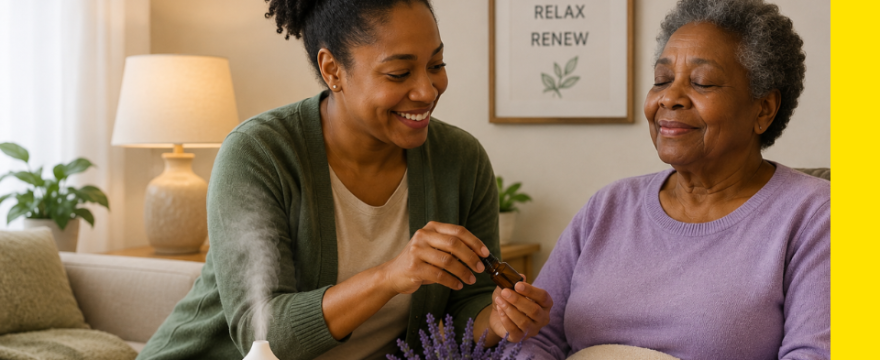
A newly published randomized controlled trial in Integrative Medicine Research explored a surprisingly simple possibility: a home-based aromatherapy program using lavender essential oil delivered by family caregivers themselves. The results were promising.
In this article, we’ll break down:
- What the study found
- How aromatherapy may support dementia care
- Why caregivers experienced benefits too
- Important limitations and safety considerations
- Practical ways families can explore aromatherapy at home
Understanding Behavioral and Psychological Symptoms of Dementia (BPSD)
Dementia affects much more than memory.
Many people living with dementia experience symptoms such as:
- Agitation
- Irritability
- Anxiety
- Sleep disturbances
- Emotional instability
- Aggression
- Restlessness
- Hallucinations or delusions
- Social withdrawal
Researchers describe these experiences as “behavioral and psychological symptoms of dementia,” or BPSD.
These symptoms can deeply affect both the person with dementia and the family members caring for them.
The study explains that BPSD can:
- Reduce quality of life
- Increase caregiver stress
- Raise the risk of hospitalization or institutional care
- Contribute to caregiver burnout and emotional exhaustion
And while medications are sometimes prescribed, many families are actively searching for gentler, non-pharmacological approaches to support emotional regulation and daily wellbeing.
That’s where aromatherapy enters the conversation.
What Is Aromatherapy?
Aromatherapy uses essential oils extracted from plants to support physical and emotional wellbeing.
According to the study, lavender essential oil may help calm the nervous system through olfactory stimulation, meaning the scent activates brain regions associated with emotion and stress regulation.
Researchers note that inhaling lavender essential oil may stimulate the release of neurotransmitters associated with relaxation and emotional balance, including serotonin and endorphins.
In simple terms:
The scent may help the brain shift toward a calmer, more regulated state.
And importantly, inhalation aromatherapy is generally considered safer than topical application because it avoids direct skin absorption, which has been linked to more adverse reactions in previous studies.
This study was especially significant because it focused on real-life home care.
Researchers recruited 80 dementia patient–caregiver pairs in Hong Kong and randomly assigned them to either:
- A home-based aromatherapy program, or
- A wait-list control group
The intervention was simple and practical:
- Family caregivers received one hour of training
- Caregivers administered lavender aromatherapy at home for 3 weeks
- Two drops of lavender essential oil were placed on a cotton pad near the person’s collar
- The aromatherapy was used twice daily for one hour each time
Researchers then measured:
- Severity of dementia-related behavioral symptoms
- Quality of life
- Caregiver distress
- Caregiver burden
The results were encouraging.
Compared to the control group, people with dementia who received aromatherapy showed significant improvements in:
- Irritability and emotional instability
- Disinhibition (socially inappropriate or impulsive behaviors)
- Health and wellbeing
- Social relationships
Researchers concluded that:
“This study demonstrated that aromatherapy is feasible and effective for managing BPSD in a home-based setting.”
Caregivers also reported improvements in:
- Emotional stress
- Sleep
- Relationship quality
- Overall caregiving experience
Although reductions in caregiver burden were not statistically significant, many caregivers described feeling calmer and more emotionally supported during the intervention.
The Emotional Impact on Caregivers Was Powerful
One of the most moving parts of the study came from caregiver interviews.
Many caregivers described noticeable emotional shifts in both themselves and their loved ones.
One participant shared:
“Even I have felt more relaxed and soothed in these three weeks… As a caregiver, my pressure has been relieved.”
Another caregiver noticed fewer emotional episodes:
“The frequency (of BPSD) has decreased… Her emotions were very unstable… However, after aromatherapy, I have noticed a significant decrease.”
This matters because caregiving stress is cumulative.
When caregivers experience even small moments of calm, regulation, or emotional relief, it can positively influence the entire caregiving environment.
Why Simple Rituals Matter in Dementia Care
One of the most important takeaways from this research may not be the lavender itself.
It may be the power of intentional, calming rituals.
The aromatherapy sessions created:
- Predictable moments of connection
- Gentle sensory regulation
- Repeated calming cues
- Increased caregiver attentiveness
- Opportunities for emotional co-regulation
Some caregivers even reported becoming more observant and emotionally connected with their loved ones during the process.
In dementia care, consistency and emotional safety matter deeply.
A simple ritual done with care can become an anchor in an otherwise confusing world.
Aromatherapy Is Not a Cure But It May Be a Helpful Support Tool
It’s important to be realistic.
The researchers did not claim aromatherapy cures dementia or eliminates all behavioral symptoms.
In fact, results were mixed:
- Some caregivers noticed significant improvements
- Others saw little change
- A few experienced challenges or increased stress
Researchers also acknowledged limitations:
- The intervention lasted only 3 weeks
- The sample size was relatively small
- Participants knew which group they were assigned to
- More research is needed with larger studies
Researchers concluded that the intervention was feasible, acceptable, and potentially effective when delivered at home by trained family caregivers.
Safety Considerations Before Trying Aromatherapy
Even natural approaches can have risks.
The study documented a small number of mild adverse effects, including:
- Skin irritation
- Nausea
- Dizziness
- Mild breathing discomfort
Researchers emphasized the importance of:
- Proper dosage
- Monitoring reactions carefully
- Using high-quality essential oils
- Avoiding use in people with known sensitivities or contraindications
If you’re considering aromatherapy for a loved one with dementia:
- Speak with a healthcare provider first
- Introduce scents gradually
- Watch closely for reactions
- Stop immediately if discomfort occurs
How to Try a Gentle Aromatherapy Routine at Home
If you’d like to experiment with a calming sensory routine, simplicity is best.
The study used:
- Lavender essential oil
- Two drops
- Inhalation only
- Short, consistent sessions
You might consider:
- Adding a drop of lavender to a cotton pad nearby
- Creating a calming evening routine
- Pairing aromatherapy with soft music or quiet conversation
- Using it during periods of agitation or restlessness
Keep expectations gentle.
The goal is not perfection or symptom elimination.
The goal is creating small moments of comfort, calm, and connection.
Why Non-Pharmacological Support Matters More Than Ever
As dementia rates continue rising globally, families need practical tools that are:
- Affordable
- Accessible
- Easy to learn
- Emotionally supportive
Many dementia care guidelines already recommend aromatherapy as part of non-drug approaches for managing behavioral symptoms.
This study adds something especially valuable:
It shows that family caregivers themselves can successfully deliver supportive interventions at home after brief training.
That’s empowering.
Because many caregivers already feel helpless, exhausted, or unsupported.
Sometimes even a small, manageable tool can restore a sense of agency.
Small Moments of Calm Matter
Dementia caregiving is emotionally demanding.
There is no perfect solution, no single intervention that removes all distress or uncertainty.
But this research suggests something hopeful:
Small sensory interventions, like a calming lavender ritual, may help reduce emotional volatility, improve well-being, and support both caregivers and loved ones.
Not because essential oils are magic.
But because nervous systems respond to safety, consistency, gentleness, and care.
And sometimes healing begins there.
TLDR
- A 2025 randomized controlled trial explored home-based lavender aromatherapy for dementia care.
- Family caregivers delivered the intervention at home after brief training.
- Researchers found improvements in irritability, emotional instability, and some quality-of-life measures.
- Many caregivers also reported reduced stress and improved emotional connection.
- Aromatherapy appears feasible, accessible, and relatively safe when used carefully.
Reference:
Li, B. S. Y., Cheung, A. T., Chow, K. M., & Chan, C. W. H. (2025). Effects of a home-based aromatherapy programme for the management of behavioural and psychological symptoms of dementia among older persons with dementia: A randomised controlled trial with process evaluation. Integrative Medicine Research, 14, 101113. https://doi.org/10.1016/j.imr.2024.101113
Leave a Reply