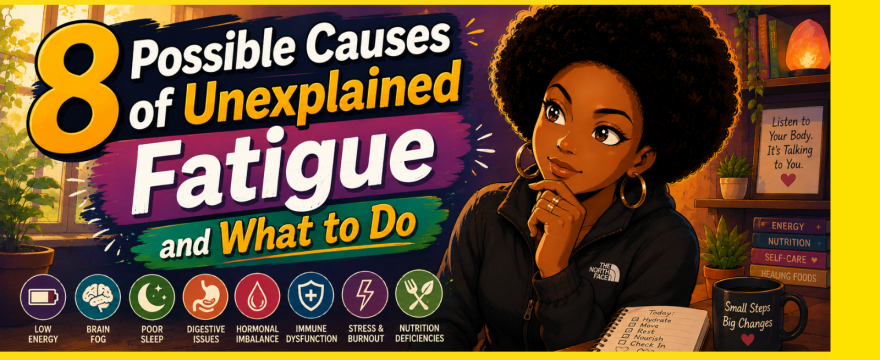
You sleep through the night, drink your morning coffee, and try to eat well, yet by midafternoon, you feel as if your body is running on empty. Maybe you cannot concentrate. Perhaps routine tasks feel unusually difficult. You may wonder whether you are lazy, unmotivated, or simply getting older.
Persistent fatigue is not a character flaw. It is a symptom, and it can have many possible causes.
Sometimes the explanation is relatively straightforward, such as inadequate sleep, dehydration, or not eating enough. In other cases, fatigue may be connected with a thyroid disorder, nutrient deficiency, sleep apnea, medication, infection, chronic illness, or a mental health condition.
The following causes of unexplained fatigue can help you recognize patterns and prepare for a conversation with a healthcare professional. They are not a substitute for an evaluation or a diagnosis.
First, What Does “Fatigue” Mean?
Fatigue is more than feeling sleepy. Sleepiness is the tendency to fall asleep, while fatigue may feel like physical heaviness, low stamina, reduced motivation, slowed thinking, or a lack of energy that does not resolve with rest.
That distinction can offer clues. Someone who keeps nodding off may have a sleep disorder. Someone whose muscles tire unusually quickly may need evaluation for anemia, medication effects, heart or lung disease, or another physical condition. Someone who feels emotionally numb and unable to initiate tasks may be experiencing depression, burnout, or a trauma-related response.
Keeping brief notes about when the fatigue appears, what makes it better or worse, and what other symptoms accompany it can make a medical appointment more productive.
1. An Underactive Thyroid
The thyroid gland produces hormones that help regulate energy use, temperature, heart function, digestion, and other essential processes. When it does not produce enough thyroid hormone a condition called hypothyroidism fatigue is common.
Other possible signs include feeling unusually cold, constipation, dry skin, slowed thinking, menstrual changes, and unexplained weight gain. Hashimoto’s thyroiditis, an autoimmune condition, is a common cause of hypothyroidism in places where iodine intake is adequate.
Because these symptoms overlap with many other conditions, they cannot diagnose a thyroid problem on their own. Evaluation usually begins with a thyroid-stimulating hormone, or TSH, test and free T4. A clinician may order additional testing, including thyroid antibodies, when the history or initial results suggest it. Free T3 is not always necessary for the initial evaluation of suspected hypothyroidism.
2. Inadequate or Poor-Quality Sleep
Even a modest amount of ongoing sleep loss can impair attention, reaction time, mood, appetite regulation, and physical performance. Caffeine can temporarily block adenosine, the chemical signal that helps create sleep pressure, but it does not replace the restoration provided by sleep.
The problem is not always the number of hours spent in bed. An irregular schedule, repeated awakenings, pain, reflux, hot flashes, anxiety, alcohol, medications, or an uncomfortable sleep environment may make sleep less restorative.
Most adults need approximately seven to nine hours of sleep, although individual needs vary. If you regularly allow enough time for sleep but still wake unrefreshed, it is worth looking beyond “sleep hygiene” alone.
3. Obstructive Sleep Apnea
Obstructive sleep apnea occurs when the airway repeatedly narrows or closes during sleep. These interruptions can reduce oxygen levels and briefly arouse the brain, sometimes without the person remembering that they woke up. As a result, someone may spend eight hours in bed and still feel profoundly tired.
Possible signs include loud snoring, witnessed pauses in breathing, gasping or choking during sleep, morning headaches, dry mouth, nighttime urination, and excessive daytime sleepiness. Sleep apnea is associated with high blood pressure, type 2 diabetes, cardiovascular disease, mood symptoms, and cognitive difficulties.
Body size can affect risk, but people in smaller bodies can also have sleep apnea because airway anatomy, age, hormones, family history, and other factors matter. If the symptoms fit, ask about a formal sleep evaluation rather than assuming that sleeping longer will solve the problem.
4. Low Iron Stores or Iron-Deficiency Anemia
Iron is needed to make hemoglobin, the protein that carries oxygen in red blood cells. When iron becomes deficient, fatigue, weakness, shortness of breath with exertion, headaches, palpitations, and reduced exercise tolerance may develop.
Iron stores can become low before hemoglobin falls enough to meet the definition of anemia. Ferritin is commonly used to estimate stored iron, but it must be interpreted in context. Inflammation can raise ferritin, and there is no single cutoff , such as 50 ng/mL , that diagnoses iron deficiency in every person.
Heavy menstrual bleeding, gastrointestinal blood loss, pregnancy, inadequate intake, poor absorption, and frequent blood donation are among the possible causes. A complete blood count, ferritin, and other iron studies can help a clinician assess the pattern.
Avoid starting high-dose iron simply because you feel tired. Excess iron can be harmful, and unexplained deficiency may require investigation for blood loss or another underlying problem.
5. Infection, Inflammation, or Chronic Illness
When the immune system responds to an infection or injury, it releases signaling proteins called cytokines. These signals can produce a familiar cluster of symptoms: low energy, reduced appetite, slower thinking, body aches, social withdrawal, and a desire to rest. Researchers sometimes call this “sickness behavior.”
Fatigue may continue with chronic infections, autoimmune diseases, inflammatory conditions, long COVID, cancer, heart or lung disease, kidney or liver disorders, and many other medical problems. That does not mean everyone with fatigue has hidden systemic inflammation, and fatigue plus low motivation does not automatically indicate a cytokine problem.
Tests such as C-reactive protein may be useful in certain clinical situations, but they are nonspecific and cannot identify the cause by themselves. Testing should be guided by symptoms, medical history, examination, and a clinician’s judgment.
6. Dehydration or Not Getting Enough Food
Dehydration can cause thirst, headache, dizziness, dark urine, weakness, and fatigue. Risk increases with heat exposure, sweating, fever, vomiting, diarrhea, certain medications, and limited access to fluids.
There is no universal requirement to drink half your body weight in ounces. Fluid needs vary with body size, climate, activity, pregnancy, diet, health conditions, and medication use. Drinking excessive water can also be dangerous for some people.
Use thirst, urine color, environmental conditions, and professional guidance as practical cues. People with heart failure, kidney disease, or another condition requiring fluid management should follow their clinician’s recommendations.
Low energy may also come from unintentionally eating too little. Restrictive diets, skipped meals, limited food access, poor appetite, and fear of certain foods can leave the body without enough energy or nutrients. A “clean” diet is not necessarily an adequate diet.
7. Blood-Sugar Swings and Unbalanced Meals
Meals dominated by refined carbohydrates and added sugars are digested quickly and may produce a rapid rise and subsequent fall in blood glucose. Some people feel sleepy, hungry, shaky, irritable, or unfocused afterward.
However, an afternoon slump or post-meal fatigue does not automatically mean reactive hypoglycemia. True hypoglycemia requires confirmation of low blood glucose occurring alongside symptoms that improve when glucose returns to normal. Sleep loss, large meals, alcohol, medication effects, and normal circadian rhythms can create similar sensations.
For steadier energy, build meals around fiber-rich foods such as beans, lentils, vegetables, whole fruit, and minimally processed whole grains you tolerate. Including an adequate amount of food and a source of plant protein can also improve satisfaction. If episodes include sweating, trembling, confusion, faintness, or occur frequently, seek medical evaluation.
8. Depression, Chronic Stress, or Burnout
Mental health conditions can cause intense physical fatigue. Depression may affect sleep, movement, appetite, concentration, motivation, and the ability to begin everyday tasks. Trauma-related responses and prolonged stress can also leave someone feeling shut down, emotionally numb, or disconnected.
This fatigue is real. It is not “all in your head,” and it cannot always be overcome by pushing harder.
Support may include psychotherapy, medication when appropriate, social connection, changes to overwhelming demands, and gentle physical activity. Movement can be helpful, but it should not be framed as proof that someone is trying hard enough. When energy is very low, the first step may be as small as sitting outside, stretching for a few minutes, taking a shower, or contacting someone supportive.
If fatigue is accompanied by hopelessness, thoughts of death, or thoughts of harming yourself, seek immediate help. In the United States, call or text 988 to reach the Suicide & Crisis Lifeline. If there is immediate danger, call emergency services.
Other Causes That Are Easy to Miss
Eight categories cannot capture every reason someone may feel exhausted. Other possibilities include:
- Medication or supplement side effects
- Alcohol or other substance use
- Menopause or perimenopause
- Pregnancy
- Chronic pain
- Allergies or breathing problems
- Heart, lung, kidney, or liver disease
- Neurological conditions
- Post-viral illness, including long COVID
- Cancer or cancer treatment
- Grief, caregiving strain, or occupational burnout
This is why persistent fatigue deserves a whole-person evaluation rather than a single supplement or self-diagnosis.
When Should You See a Healthcare Professional?
Schedule an appointment if fatigue lasts for several weeks, keeps returning, interferes with work or daily life, or is accompanied by other unexplained symptoms. Bring a list of medications and supplements along with notes about sleep, menstrual bleeding, diet, mood, recent illnesses, and when the fatigue began.
Seek urgent care for fatigue accompanied by chest pain, severe shortness of breath, fainting, confusion, one-sided weakness, signs of significant bleeding, or another sudden or severe symptom.
Depending on your history, a clinician may consider a physical examination and tests such as a complete blood count, metabolic panel, TSH, ferritin or iron studies, pregnancy testing, glucose-related testing, or a sleep study. More testing is not always better; the appropriate evaluation depends on the individual.
How to Begin Reclaiming Your Energy
While you investigate the cause, return to the foundations without blaming yourself:
- Create enough opportunity for sleep. Keep a reasonably consistent schedule and notice whether you wake restored.
- Eat regular, adequate meals. Emphasize fiber-rich whole plant foods while ensuring that you consume enough energy, protein, iron, and other essential nutrients.
- Stay appropriately hydrated. Drink regularly and adjust for heat, activity, illness, and your medical needs.
- Move at a level you can recover from. Gentle movement may improve energy, but severe or worsening symptoms should be evaluated before you increase exercise.
- Track patterns, not perfection. Record sleep, meals, symptoms, medications, stress, and menstrual changes for one or two weeks. The goal is to discover useful connections, not monitor yourself obsessively.
- Ask for help. Persistent fatigue deserves attention even if initial testing is normal. A normal basic workup does not make your experience imaginary.
Your exhaustion is information. You do not need to wait until you completely fall apart before listening to it.
When you think about your own fatigue, what feels like the biggest challenge right now, figuring out why you’re so tired, knowing what to do about it, or actually having the energy and time to make changes?
I’d love to hear from you. Share your answer in the comments below. I read every response.
Leave a Reply