Rates of mental health disorders and chronic stress are currently at an all-time high, creating a global epidemic that heavily burdens individuals and healthcare systems alike. While traditional clinical interventions and medications are important, many experts are recognizing that these methods alone do not always address the root lifestyle and metabolic factors driving our modern anxiety. This is where health coaching steps in. Health coaching provides a critical, proactive bridge in mental healthcare, empowering individuals to understand their nervous systems, implement sustainable lifestyle changes, and effectively manage daily stress.
Understanding the Stressed Brain
To understand why coaching is so effective, we must first look at what chronic stress does to the body. When faced with a perceived threat or stressful event, the brain’s fear centers activate the Hypothalamic-Pituitary-Adrenal (HPA) axis, flooding the body with cortisol to trigger a “fight-or-flight” survival response.
While this response is helpful for immediate danger, chronic stress causes the HPA axis to repeatedly release cortisol, leading to an imbalance that impairs the prefrontal cortex (the brain’s rational thinking center) and leaves the amygdala (the fear center) on high alert. This constant hypervigilance keeps the brain stuck in a repetitive cycle of anxious thoughts, rumination, and worry. When overwhelmed by this cycle, individuals often fall out of their “Window of Tolerance”, the optimal state of emotional regulation, and veer into hyperarousal (panic, racing thoughts) or hypoarousal (numbness, disconnection).
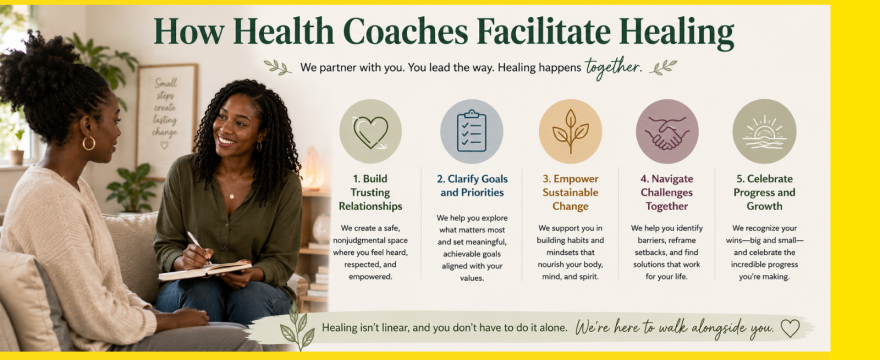
How Health Coaches Facilitate Healing
A health coach acts as a guide to help clients navigate their way back into their Window of Tolerance. By utilizing targeted goal-setting techniques, coaches provide the structure and accountability needed to break the cycle of stress.
Key strategies employed by health coaches include:
- Fostering a Positive Mindset: Coaches help clients bring awareness to past cycles of feeling “stuck.” They work to identify limiting beliefs, recognize triggers that activate the inner critic, and practice pausing before reacting.
- Empathy and Support: By maintaining unconditional positive regard and validating a client’s experiences, coaches create a safe environment. They also encourage clients to tap into their own external sources of support, such as family or community.
- Positive Confrontation: To ensure clients see actual results, coaches utilize positive confrontation. By conveying concern in a direct, nonjudgmental, and curious manner, coaches help clients stay accountable to their goals and remain engaged in their own healing process.
A Holistic Framework for Resilience
Effective stress management cannot happen in a vacuum. Health coaching excels because it utilizes an integrated, holistic approach, addressing what is known as the “Four Circles of Health and Healing”: the biological, psychological, social, and spiritual dimensions of a person’s life.
Coaches collaborate with clients to optimize their biological and psychological health by building brain-healthy habits. This includes prioritizing 7 to 8 hours of quality sleep, engaging in regular physical activity, and adopting a nutrient-dense, whole-food diet. These foundational habits, sometimes referred to as part of “Life’s Essential 8,” are powerful, scientifically-backed tools that lower systemic inflammation, balance blood sugar, and naturally mitigate stress.
Furthermore, coaches can introduce clients to practical nervous system regulation techniques. Simple daily practices, such as diaphragmatic breathwork, progressive muscle relaxation, or using the five-senses grounding exercise, can immediately interrupt the cycle of racing thoughts. These somatic exercises actively stimulate the vagus nerve, which signals the parasympathetic nervous system to initiate a “rest and digest” state, ultimately lowering heart rate and cutting off the production of stress hormones.
By combining empathy, accountability, and holistic lifestyle education, health coaching equips individuals with the tangible skills they need to calm their minds, build emotional resilience, and reclaim control over their mental well-being.
If this article and the blog have been helpful to you, share it with a friend.
Leave a Reply