There’s a conversation I keep having. It comes up in different rooms, with different people, but it always lands the same way.
Someone finds out I work at a facility that supports people through mental health challenges, and they’re curious. They ask questions. And at some point, I mention it, the snack cabinet.
The one stocked with packaged cookies, crackers sealed in plastic, chips from a vending-style basket. All the usual suspects.
And every single time, there’s this pause internally. Because here I am, an integrative nutrition coach, a licensed brain health trainer, someone who once co-owned an organic raw vegan eatery in Ravenswood on the north side of Chicago, watching people who are actively working on their mental health reach for the very foods that research tells us can make that work harder.
I don’t say that to be critical of the facility. They’re doing meaningful work. But I do think there’s a reimagining that needs to happen, and I think it starts with the snack cabinet.
Here’s the thing. This particular facility actually has a metabolic health program. Which means they already understand the connection between the body and the brain. They already know that blood sugar, inflammation, and gut health don’t stay outside the therapy room door.
But then snack time comes, and it’s like that knowledge goes on break.
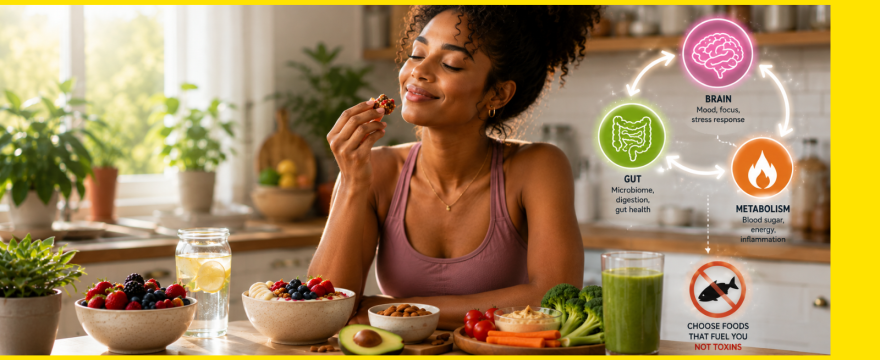
Processed snacks spike blood sugar. They drive inflammation. They feed the kind of gut dysbiosis that research increasingly links to anxiety, depression, and mood dysregulation. If you’re running a metabolic program on one end and handing out ultra-processed food on the other, you’re working against yourself.
The good news? The kitchen is already there. The space already exists. It would really just take a reorganization, a little investment, and a vision.
What I Keep Imagining: A Metabolic Health Café
When I owned my raw food eatery in Ravenswood, I saw firsthand what happens when people experience food that actually nourishes them. We were tucked into the north side of Chicago, the kind of neighborhood spot that quietly became a destination. When Zoë Kravitz and her team were in the city filming Divergent, they found their way to us. That’s what real food does, it draws people in.
The energy shift. The mental clarity. The way people slow down and actually receive something good.
That’s what I want for mental health spaces. Not a cafeteria overhaul. Not a complicated program. Just a corner, a small, intentional setup, where people can come out for group programming and have their snack time feel like part of the healing instead of a contradiction to it.
I picture it like this: a little metabolic health café station. A few simple, rotating options. Things that are easy to prepare, easy to serve, and genuinely supportive of brain health.
Here is a brain-healthy snack menu designed specifically to support mental health, stabilize mood, and protect cognitive function:
Sweet & Mood-Boosting Snacks
- Walnut-Cacao Energy Squares: Made by blending dates, walnuts, raw cacao powder, and chia seeds. Walnuts and chia seeds are rich in plant-based ALA omega-3 fatty acids, which are linked to a brighter mood, quicker thinking, and the growth of new brain cells in the hippocampus. Cacao is rich in flavonoids that protect neurons and support mood.
- Blueberry-Apple Walnut Crisp Cups: A baked mix of diced apples, fresh blueberries, oats, walnuts, and cinnamon. Blueberries are loaded with anthocyanins that fight oxidative stress and inflammation in the brain, which are major drivers of cognitive decline.
- Chocolate-Covered Sunflower Seed Butter Stuffed Dates: Medjool dates stuffed with sunflower seed butter and dipped in dark chocolate. Sunflower seeds provide vitamin E and other antioxidants shown to slow cognitive decline and reduce brain inflammation.
Savory & Calming Snacks
- Herbed Edamame Spread with Bell Peppers: A smooth blend of edamame, lemon juice, garlic, and fresh herbs used as a dip. Edamame provides the plant-based protein amino acids your brain needs to build mood-regulating neurotransmitters like dopamine and serotonin. It is also packed with magnesium, which helps calm an overactive nervous system and supports mental clarity.
- Popcorn with Nutritional Yeast: Air-popped popcorn tossed with olive oil and nutritional yeast. Nutritional yeast is an excellent source of B vitamins, especially B12. Vitamin B12 is absolutely critical for the production of serotonin and dopamine; maintaining adequate B12 levels is a highly effective way to manage and prevent depressive symptoms.
- Roasted Seaweed Snacks with Sesame Seeds: Nori squares lightly roasted with sesame oil and seeds. Seaweed is rich in iodine, which regulates thyroid function and brain energy metabolism. It also contains unique polysaccharides that help calm inflammation in the brain.
Brain-Healthy Beverages & Parfaits
- Probiotic Mango Chia Parfaits: A layered snack of coconut yogurt, fresh mango, and chia seeds. Yogurt contains probiotics (specifically strains like Lactobacillus and Bifidobacterium) that directly communicate with your brain via the vagus nerve to improve mood, anxiety, and depression.
- Soothing Spiced Matcha Tea or Matcha Energy Balls: Matcha provides a unique combination of caffeine and the calming amino acid L-theanine, which sharpens attention and improves working memory without the jittery, anxiety-inducing effects of standard coffee. It is also loaded with EGCG, a powerful antioxidant that protects brain cells from damage.
- Blackberry Ginger Smoothie Shots: A quick blended shot of blackberries, fresh ginger, chia seeds, and almond milk. Ginger and blackberries work together to strongly combat neuroinflammation and oxidative stress, both of which are deeply connected to the onset of depression and anxiety.
This Isn’t About Perfection. It’s About Alignment.
I’m not saying every mental health facility needs to become a five-star wellness retreat. I’m saying: if you already believe that the body affects the mind, and most integrative and trauma-informed spaces do, then the snack cabinet is a logical next place to put that belief into action.
Not everything has to be raw. Not everything has to be made from scratch. But it can be whole foods. It can be intentional. It can be one more small way you tell the people in your care: we thought about you, all the way down to this very detail of nutrition.
That matters.
Have thoughts on brain-healthy snacking in clinical or community spaces? I’d love to hear from you. And if you’re looking to bring more of this into your own home or practice, that’s exactly what we’re here for at Raw Food Meal Planner.
Leave a Reply