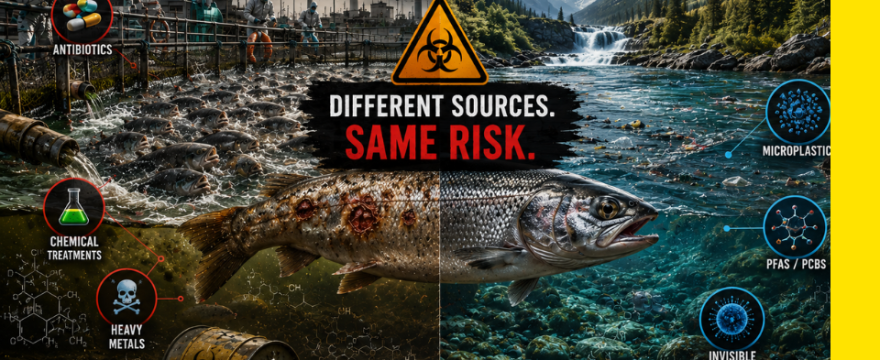
Eating certain types of fish, particularly farmed varieties, may contribute to fat accumulation and metabolic disorders due to the presence of environmental chemicals known as obesogens. Obesogens are pollutants that disrupt the endocrine system, which regulates metabolism, energy balance, and appetite, ultimately promoting weight gain and excess body fat.
Contaminated seafood is a primary source of human exposure to these persistent pollutants. For example, farmed Atlantic salmon is considered one of the greatest sources of dietary pollutants, harboring high levels of persistent organic pollutants (POPs) such as polychlorinated biphenyls (PCBs) and hexachlorobenzene. Animal studies have shown that consuming a farmed salmon diet or crude fish oil highly enriched with POPs induces abdominal obesity, insulin resistance, and hepatic steatosis (fatty liver).
Another specific obesogen found in contaminated seafood is tributyltin (TBT), a chemical widely used in the marine industry. TBT exposure directly promotes the differentiation of preadipocytes into mature fat cells and has been explicitly linked to increased fat accumulation across multiple species.
Additionally, the nutritional composition of certain farmed fish can promote severe bodily inflammation, a condition closely linked to metabolic dysfunction. Farm-raised tilapia contains exceptionally high levels of pro-inflammatory omega-6 fatty acids (like arachidonic acid) and very low levels of beneficial omega-3s. Researchers note that the inflammatory potential of an average serving of farmed tilapia is actually higher than that of an 80-percent-lean hamburger, doughnuts, or pork bacon.
These persistent pollutants create a harmful cycle within the body. Because they are highly lipophilic (fat-soluble), pollutants absorbed from fish accumulate in human adipose (fat) tissue. As individuals gain more body fat, the retention and toxicity of these chemicals can increase, turning the body’s own fat stores into a continuous internal source of toxic exposure that further disrupts metabolic health.
Large epidemiological studies suggest that overall fish consumption has no association with long-term body-weight gain. In fact, wild-caught fish are generally considered a safer choice than farmed fish when it comes to toxic exposure; for instance, farmed salmon averages nearly ten times the PCB (polychlorinated biphenyl) load of wild-caught salmon.
However, wild-caught fish can still contribute to fat accumulation and metabolic issues if they are harvested from heavily polluted waters. Because environmental pollutants often act as “obesogens,” chemicals that alter lipid metabolism, disrupt energy balance, and promote fat storage, consuming contaminated wild fish carries risks similar to consuming contaminated farmed fish.
The level of risk depends heavily on the specific environment the wild fish comes from:
- Fatty wild fish from polluted regions, such as wild salmon and herring caught in the Baltic Sea, the Gulf of Bothnia, or certain large lakes in Sweden, contain particularly high contents of persistent organic pollutants (POPs) like dioxins, DDT, and PCBs.
- Wild sport-caught fish, such as walleye, northern pike, and bass caught in Lake Michigan tributaries, have also been shown to accumulate significant levels of PCBs.
In short, while wild-caught fish are generally less contaminated than farm-raised varieties and are not broadly linked to weight gain, frequent consumption of wild fish from highly polluted ecosystems can still expose your body to obesogenic chemicals that promote fat storage and metabolic dysfunction.
If you are looking to lose fat, avoid fish, and minimize your exposure to obesogenic chemicals, research points strongly toward a minimally processed, whole-food diet, with a specific focus on plant-based or low-fat approaches.
Here is what the evidence suggests you should focus on:
1. A Minimally Processed, Plant-Based, Low-Fat Diet A rigorous inpatient study compared an animal-based, low-carbohydrate (ketogenic) diet to a plant-based, low-fat diet to see how they affected fat loss and calorie intake. The results were striking:
- Greater Fat Loss: While both diets caused weight loss, only the plant-based, low-fat diet led to significant body fat loss. The animal-based keto diet mostly resulted in the loss of fat-free mass (like water and protein) during the study.
- Automatic Calorie Reduction: Participants on the plant-based, low-fat diet naturally consumed 550 to 700 fewer calories per day compared to the animal-based diet, without feeling any difference in hunger, fullness, or satisfaction.
- What to eat on this diet: This diet consists of about 75% carbohydrates and 10% fat. You should focus on legumes (lentils, peas, beans), whole grains, root vegetables, fruit, and non-starchy vegetables.
2. Avoid Ultra-Processed Foods (UPFs) To lose fat and avoid obesogenic chemicals, it is crucial to cut out ultra-processed foods. Studies show that diets high in UPFs lead people to overeat by about 500 extra calories a day and gain weight. Furthermore, a recent study found that eating ultra-processed foods is directly linked to storing more fat inside your muscle tissue, completely independent of your total calorie intake or body mass index (BMI).
- What to eat instead: Build your meals around single-ingredient whole foods.
3. Be Mindful of How Your Food is Packaged, and Grown. Obesogens are not exclusive to contaminated fish. They are widespread in our food system, often entering our bodies through food packaging and agricultural chemicals.
- Plastics and Cans: Chemicals like Bisphenol A (BPA) and phthalates are known obesogens that can leach into food from plastic packaging, plastic wrap, and the lining of metal food cans.
- Pesticides: Many agricultural pesticides act as endocrine disruptors that promote fat storage.
By shifting your diet toward fresh, minimally packaged, whole foods and, when possible, choosing organic produce to limit pesticide exposure, you can effectively reduce your intake of obesogenic chemicals while supporting healthy, sustainable fat loss.
Thank you for sharing this information regarding contaminated fish! Unbelievable the damage from eating fish from polluted water. If the water wasn’t polluted fish would be healthy to eat. Would you agree with that statement?
Okay, so removing my moral judgment from it, removing industrial pollutants makes fish safer, but even perfectly clean, unpolluted fish have a more complicated nutritional profile than they’re often given credit for.
Even without any environmental contamination, fish is still an animal protein, and that comes with its own set of considerations. When gut bacteria break down animal protein, they can produce a compound called TMAO, which is a known risk factor for cardiovascular disease. Fish also contains heme iron, which gut bacteria can convert into potentially carcinogenic compounds. Like all animal products, it’s a concentrated source of methionine, an amino acid that, in excess, may suppress longevity pathways and promote cancer-related growth hormones. And perhaps most importantly, fish contains zero dietary fiber, the single most profound nutritional gap in the American diet, and one of the most essential nutrients for gut health, inflammation control, and chronic disease prevention.
How you prepare fish matters too. Frying it breaks down the omega-3s and introduces harmful fats, effectively canceling out the benefits you were eating it for in the first place.
The bottom line is that fish occupies a complicated middle ground, better than many animal proteins, but not without real drawbacks. If you want the brain-boosting benefits of long-chain omega-3s without the trade-offs that come with animal protein, plant-based sources like walnuts, chia seeds, flaxseeds, and algae oil deliver them cleanly and without the issues mentioned above.