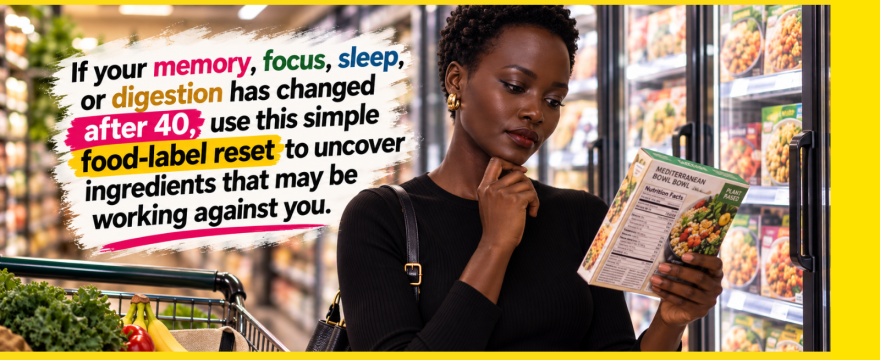
When you reach age 40 and beyond, you might notice that your mind doesn’t bounce back quite as quickly as it used to. Maybe you find yourself struggling to recall a common word, staring blankly at your computer screen, or feeling a persistent mental cloudiness that more sleep doesn’t seem to cure.
Many people immediately assume this “brain fog” is just an inevitable part of normal aging. But in the fields of clinical neurology and nutritional psychiatry, we look at a much more immediate, physical cause: the daily accumulation of chemical toxins in our food supply.
As we age, our bodies’ natural detoxification pathways, coordinated by the gut, liver, kidneys, and skin, can become more easily overwhelmed. When this happens, environmental and dietary toxins build up in our tissues, causing cellular damage, dropping vital blood flow to the brain, and directly raising the risk of severe memory problems, chronic brain fog, and long-term cognitive decline.
The most frustrating part is that many of these toxins are hiding inside products explicitly marketed to you as “healthy.” If you want to clear the mental fog and protect your brain, it is time to perform a food-label reset and eliminate three highly damaging ingredients from your diet.
1. Excitotoxins: MSG and Sneaky “Natural Flavors”
The first group of ingredients to strip from your pantry are excitotoxins. Excitotoxins are a class of chemical food additives that bind to receptors in your brain, overstimulating your brain cells to the point of exhaustion and, in some cases, physically killing neurons through toxic over-excitation.
The most infamous excitotoxin is monosodium glutamate (MSG), but food manufacturers have become highly skilled at hiding it on “healthy” labels. When reading a label, look out for hydrolyzed vegetable protein, yeast extract, and even generic “natural flavors”, all of which frequently contain high concentrations of hidden MSG. By triggering erratic brain cell firing and promoting low-grade neuroinflammation, these compounds disrupt your brain’s processing speed and leave you feeling fatigued, irritable, and unfocused.
2. Artificial Sweeteners: Aspartame and Sucralose
In an effort to avoid highly addictive refined sugars, many health-conscious adults turn to “diet” or “zero-sugar” options like light yogurts, protein powders, and sugar-free creamers. However, synthetic sweeteners like aspartame and sucralose are major chemical stressors on your brain and gut.
Aspartame is a potent, direct excitotoxin. Once ingested, its metabolic byproducts can cross the blood-brain barrier, disrupting the delicate balance of neurotransmitters needed for memory and focus. These synthetic sweeteners also actively disrupt your metabolism and alter the healthy composition of your gut microbiome. This gut dysbiosis weakens your intestinal lining, causing “leaky gut.” As a result, inflammatory molecules escape into your bloodstream, travel up your vagus nerve, and create widespread neuroinflammation in your central nervous system, leaving you with a severely compromised attention span and cognitive fatigue.
3. Artificial Colors and Food Dyes (Red Dye #40)
Synthetic food dyes are not just found in children’s candies. They are routinely added to “healthy” flavored oatmeals, protein bars, fruit-flavored yogurts, and sports drinks to make them look visually appealing. Among these, red dye #40 acts as a powerful chemical stressor on your nervous system.
Synthetic colors and dyes are clinically recognized neurotoxins that can increase brain excitability, trigger hypervigilance, and cause severe cognitive irritation. Artificial dyes also significantly tax your body’s detoxification systems and elevate systemic oxidative stress, an imbalance characterized by an overproduction of damaging free radicals. This cellular strain damages your mitochondria, the powerhouses of your cells, robbing your brain of the steady energy it needs to function clearly.
How to Do Your Food-Label Reset: A 3-Step Action Plan
To reclaim your cognitive sharpness, protect your blood vessels, and support your gut health, begin with a simple three-step pantry reset.
Step 1: Become a Label Detective
Start by ignoring front-of-package health claims like “all-natural,” “sugar-free,” or “vegan-friendly.” Instead, flip the product over and read the actual ingredient list. Scan specifically for aspartame, sucralose, and artificial sweeteners; red dye #40 and other artificial colors; and MSG, hydrolyzed vegetable protein, BHA, and BHT. If any of these are listed, put the item back on the shelf.
Step 2: Utilize Safe, Whole-Food Swaps
Next, transition your diet toward a diverse pattern of whole, organically grown plant foods like berries, leafy greens, raw nuts, and seeds, which are naturally free of synthetic food additives.
When it comes to sweeteners, there is also an important distinction between artificial sweeteners, stevia, and whole-food sweeteners. Synthetic options such as aspartame and sucralose are the ingredients you want to avoid. Pure stevia drops offer a plant-derived alternative, but they don’t necessarily need to be your first choice.
Instead, when you want to add sweetness to tea, a warm morning drink, a smoothie, or a recipe, prioritize whole dates, date paste, or date syrup. Dates provide naturally occurring plant compounds and nutrients alongside their sweetness, making them a more whole-food-centered option.
When possible, choose whole dates or homemade date paste, since these retain more of the fruit’s original structure and fiber. Date syrup can also be a convenient option when you need a liquid sweetener.
The goal isn’t simply to replace one intensely sweet ingredient with another. It’s to gradually shift your palate, and your pantry, toward foods that provide sweetness along with nutritional value.
Step 3: Support Your Body’s Detox Pathways
Finally, if you have been consuming these additives regularly, help your body flush them out by supporting your natural organs of detoxification. Support your kidneys by drinking 8 to 10 glasses of clean, filtered water daily to help them filter out accumulated waste. Support your liver by eating plenty of sulfur-rich brassica family vegetables, including broccoli, cabbage, cauliflower, and Brussels sprouts. These vegetables contain compounds that actively support your liver’s detoxification enzymes.
You can also support your gut by eating prebiotic-rich fibers, such as apples, onions, and root vegetables. These foods feed your beneficial gut microbes so they can produce short-chain fatty acids (SCFAs) like butyrate. These SCFAs strengthen your gut lining, keep your blood-brain barrier intact, and naturally quiet the brain’s internal stress alarm.
Ready to Put What You’re Learning Into Practice?
Knowing what supports your brain health is one thing. Making those changes work in your real life is another.
That’s why I created Brain Health Reset: 9 Weeks to Better Energy, Focus & Sleep for women in helping professions who spend so much time supporting everyone else that their own health gets pushed aside.
Enrollment is coming soon. Join the Early Interest List to be the first to know when registration opens.
Leave a Reply